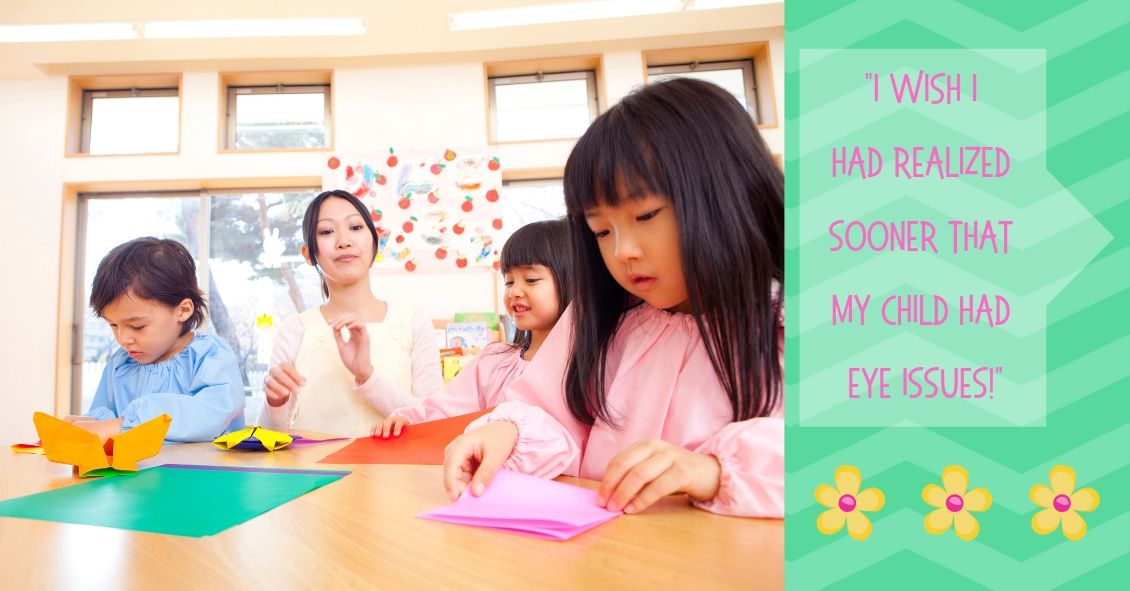
Don't be one of the thousands of parents every year who wish, "I wish I had realized sooner that my child coudn't see properly!"
Did you know that early intervention in children's vision is the key to success?
- 80% of learning comes through vision.
- In the first year of life, then again by age 3 or 4, each child needs a comprehensive eye exam.
- 6 months old is not too early.
Even though a school vision screening, nurse evaluation, or pediatrician screening is important, it doesn't take the place of a comprehensive eye exam by an eyecare professional. Some symptoms of an undetected vision problem include: decreased performance in school, aversion to reading, excessive blinking, eye rubbing, headache, or inability to see 3-D movies properly.
This could indicate conditions such as amblyopia (lazy eye), nearsightedness (myopia), astigmatism, or farsightedness (hyperopia) that can be corrected with glasses.
More serious conditions may need surgery such as esotropia, where the eye turns in, or exotropia where the eye turns out.
Although school screenings, nurses, and pediatricians are extremely valuable, they don't take the place of a comprehensive eye exam by an Optometrist or Ophthalmologist.
In fact, school screenings can give a false sense of security. There are visual skills necessary for reading that aren't diagnosed easily just by reading an eye chart. If a child frequently lose his or her place while reading, he or she may benefit from glasses, vision exercises, or therapy.
Vision Therapy is training of the eyes that help alleviate issues that glasses alone can not.
A comprehensive exam can also reveal more serous threats to vision and health in children. A more rare, but life threatening condition is a fast growing eye tumor called retinoblastoma. The proximity of the eye to the brain makes fast intervention critical. This is a condition that parents might notice by looking at pictures and noticing a "white pupil."
Resources to find out more information on children's vision can be found through your local eye care provider or websites such as American Optometric Association.
Also look for the InfantSEE program. It is a no cost public health program for early detection in the first year of life.
Don't Shake is the National center on Shaken Baby Syndrome
And American Academy of Pediatrics
The content of this blog cannot be reproduced or duplicated without the express written consent of Eye IQ.